Artemis II Mission
Humanity's Return to Lunar Exploration
Mission Overview
Artemis II marks a historic milestone in human space exploration as NASA's first crewed mission beyond low Earth orbit since Apollo 17 in December 1972. This groundbreaking 10-day journey will send four astronauts on a trajectory around the Moon, venturing farther into deep space than any human has traveled in over half a century.
Unlike its predecessor Artemis I, which flew uncrewed in November 2022, Artemis II will validate the entire Orion spacecraft with crew aboard—testing critical life support systems, crew interfaces, communication networks, and human-rated navigation capabilities in the harsh deep space environment beyond Earth's protective magnetosphere.
Mission Significance: Artemis II is the essential proving ground for sustained lunar exploration. Every system, procedure, and technology tested on this flight directly enables the Artemis III lunar landing mission and establishes the foundation for permanent human presence on and around the Moon.
Launch Profile
Launch Window
Artemis II is scheduled to launch no earlier than April 1, 2026 at 22:24 UTC from Kennedy Space Center's historic Launch Complex 39B, the same pad that launched the Saturn V rockets during the Apollo program. This launch window represents years of preparation and testing to ensure crew safety for humanity's return to deep space.
Space Launch System (SLS)
The mission will launch aboard the Space Launch System Block 1 configuration, currently the world's most powerful operational rocket:
- Total Height: 322 feet (98 meters)—taller than the Statue of Liberty
- Liftoff Thrust: 8.8 million pounds—15% more powerful than Saturn V
- Core Stage: Four RS-25 engines (former Space Shuttle Main Engines) burning liquid hydrogen and oxygen
- Solid Rocket Boosters: Two five-segment boosters providing 75% of initial thrust
- Upper Stage: Interim Cryogenic Propulsion Stage (ICPS) powered by a single RL10 engine
- Payload Capacity: 27 metric tons to trans-lunar injection
Ascent Sequence
The launch sequence unfolds with precision choreography: solid boosters burn for approximately 2 minutes before separation, the core stage continues burning for 8 minutes reaching orbital velocity, and after a parking orbit checkout period, the ICPS performs the critical Trans-Lunar Injection (TLI) burn to send Orion toward the Moon.
The Crew
Artemis II's four-person crew represents multiple historic firsts and brings together exceptional experience in spaceflight, test piloting, and space station operations:
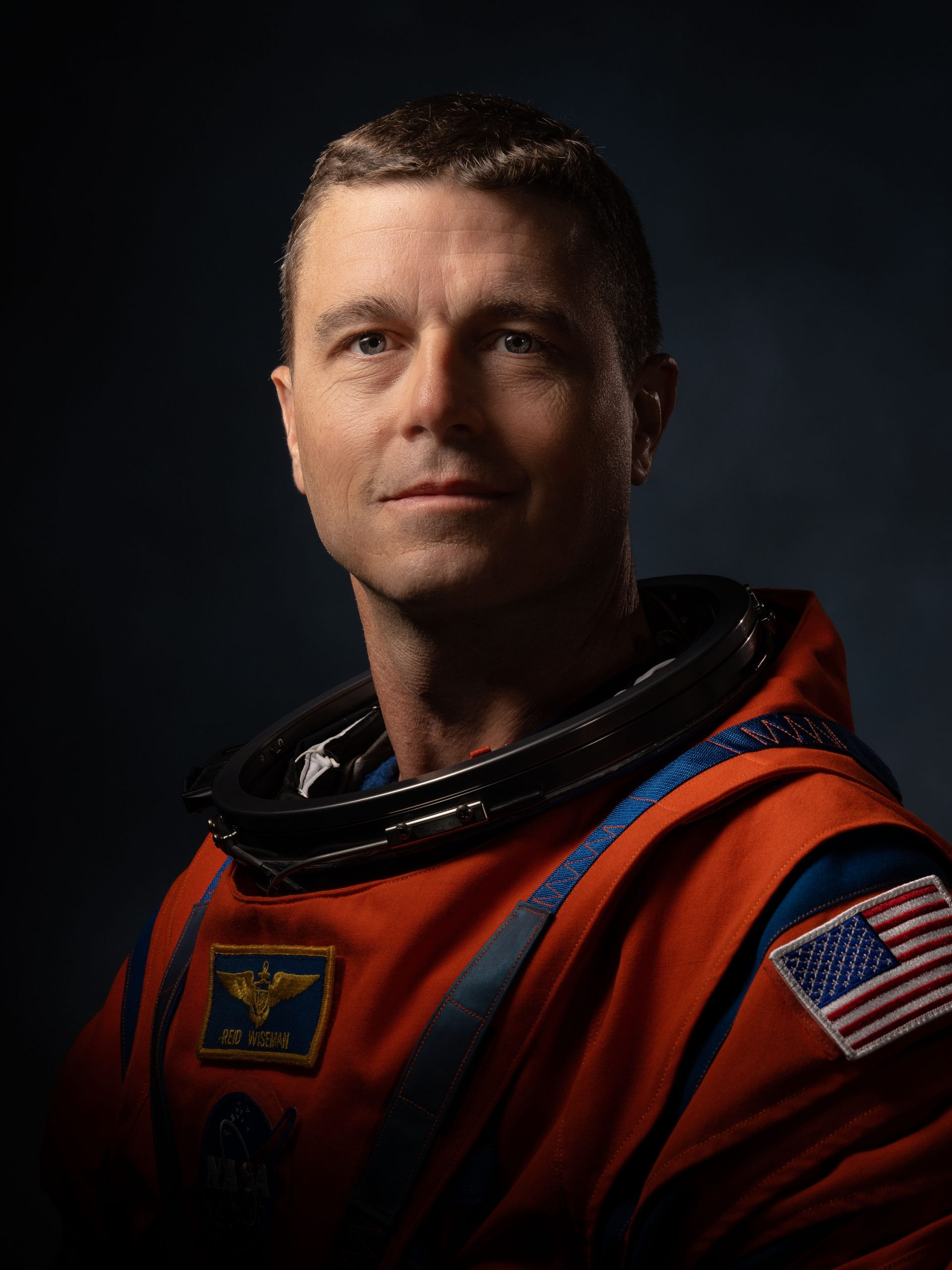
Reid Wiseman
Commander • NASA
U.S. Navy test pilot and former ISS Expedition 41 Flight Engineer with 165 days in space and 12 hours, 54 minutes of EVA time. Wiseman brings critical leadership experience and extensive spacewalking expertise to guide the crew through this unprecedented deep space mission.
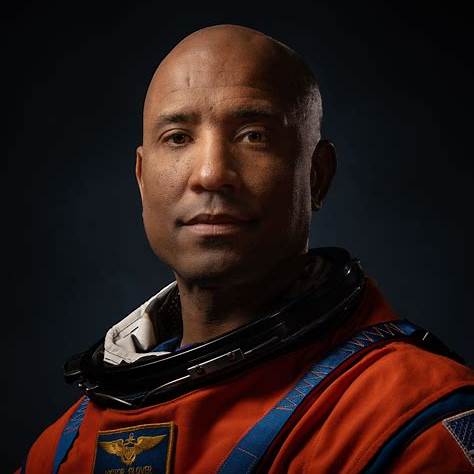
Victor Glover
Pilot • NASA
U.S. Navy aviator and veteran of SpaceX Crew-1/Expedition 64, with 168 days aboard the ISS. Glover will make history as the first person of color to travel beyond low Earth orbit, piloting Orion's complex navigation and flight control systems during lunar operations.

Christina Koch
Mission Specialist • NASA
Electrical engineer and ISS Expedition 59/60/61 veteran who holds the record for the longest single spaceflight by a woman (328 consecutive days). Koch will become the first woman to travel beyond low Earth orbit, bringing unparalleled long-duration spaceflight experience.
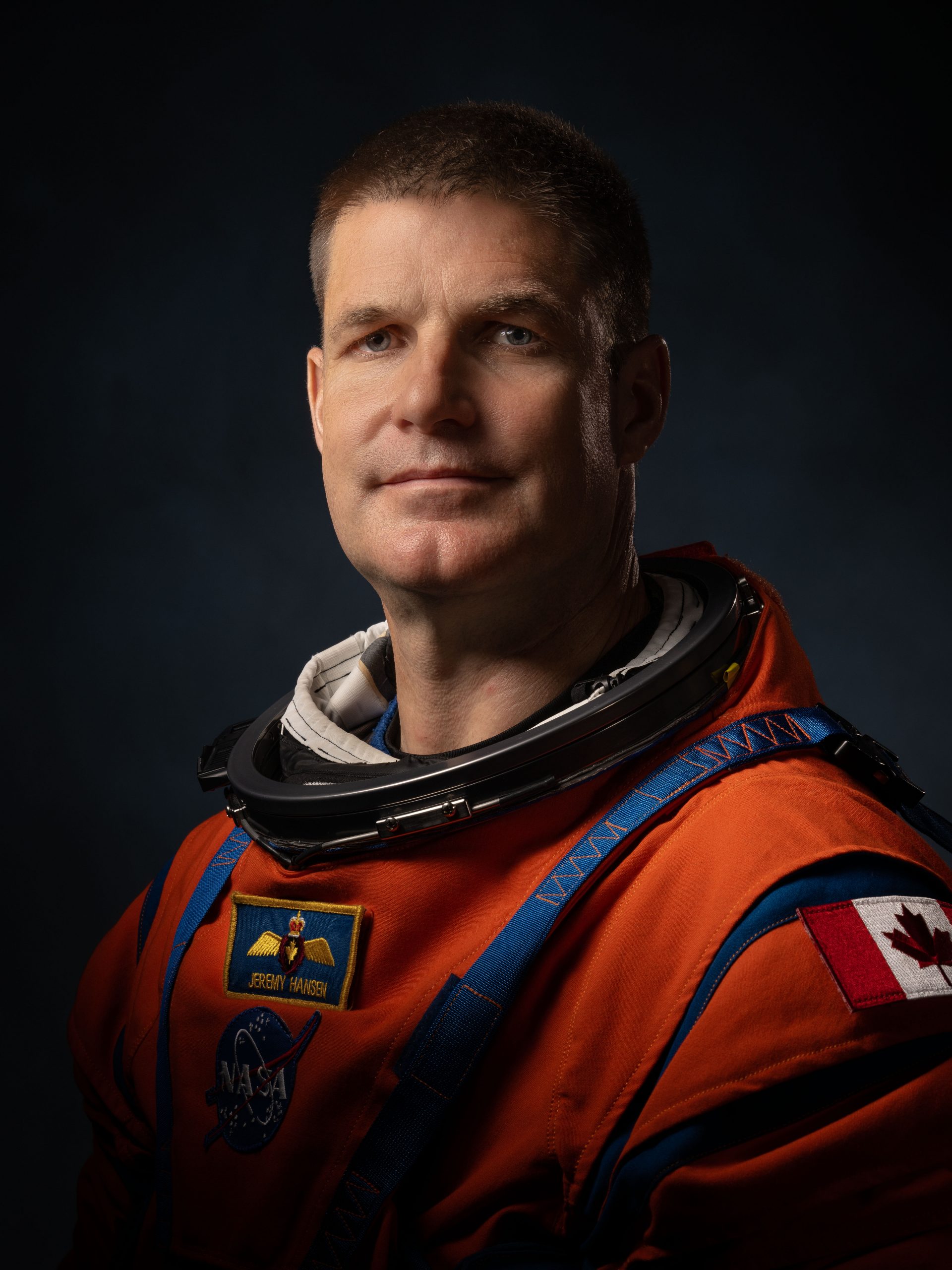
Jeremy Hansen
Mission Specialist • CSA
Canadian Space Agency astronaut and former CF-18 fighter pilot. Hansen will make history as the first Canadian astronaut to travel to deep space, representing international partnership in lunar exploration and demonstrating the collaborative nature of the Artemis program.
Orion Spacecraft
The Orion Multi-Purpose Crew Vehicle is NASA's next-generation deep space exploration capsule, designed from the ground up for missions beyond low Earth orbit. Artemis II will fly spacecraft CM-002 (Crew Module 2) with ESM-2 (European Service Module 2).
Crew Module (CM-002)
- Diameter: 16.5 feet (5 meters)—larger than Apollo
- Habitable Volume: 316 cubic feet—20% more than Apollo
- Crew Capacity: 4 astronauts with full life support for 21 days
- Heat Shield: Largest ever built—Avcoat ablative material withstands 5,000°F reentry temperatures
- Systems: Advanced avionics, touchscreen displays, backup manual controls, radiation monitoring
- Launch Abort System: Attitude Control Motor can pull crew module away from failing rocket in under 3 seconds
European Service Module (ESM-2)
Built by the European Space Agency and Airbus Defence and Space, the Service Module provides all consumables and propulsion:
- Main Engine: One AJ10 engine (repurposed from Space Shuttle OMS) providing 6,000 lbf thrust
- Auxiliary Thrusters: 33 engines for precise attitude control and orbital maneuvering
- Solar Arrays: Four 7-meter wings generating 11.2 kW of power
- Propellant: 8.6 metric tons of hypergolic propellant (MMH/NTO)
- Life Support: Oxygen, nitrogen, water storage, thermal regulation, and CO2 removal systems
Proven Design: The Orion spacecraft successfully completed its uncrewed test flight during Artemis I (November 16 - December 11, 2022), traveling 270,000 miles from Earth and demonstrating all critical systems including the heat shield during a 25,000 mph reentry.
Mission Profile & Timeline
Artemis II will follow a hybrid free-return trajectory—a carefully calculated path that uses the Moon's gravity to naturally return the spacecraft to Earth if propulsion systems fail, while still allowing flexible mission opportunities.
Mission Phases
SLS launches Orion into a temporary Earth parking orbit at ~100 miles altitude. After systems checkout, the ICPS upper stage performs the Trans-Lunar Injection (TLI) burn, accelerating Orion to 25,000 mph toward the Moon. Crew performs critical systems verification and begins adaptation to microgravity.
Orion coasts toward the Moon at increasing distance from Earth. Crew conducts comprehensive systems testing, verifies life support functionality, practices emergency procedures, and monitors radiation exposure. Earth gradually shrinks in the rear windows as the lunar disc grows ahead.
Orion performs a powered flyby of the Moon, passing approximately 6,400 miles (10,300 km) beyond the lunar far side—farther than any human has ever traveled. The crew witnesses views of the lunar surface never seen by human eyes in real-time, tests deep space communication systems at maximum range, and uses the Moon's gravity to adjust trajectory for Earth return.
The spacecraft begins its journey back to Earth, coasting for approximately 4 days. Crew continues systems testing, conducts scientific observations, communicates with Mission Control, and prepares for high-speed reentry. Final trajectory correction burns fine-tune the landing point.
Orion enters Earth's atmosphere at approximately 25,000 mph (Mach 32)—one of the fastest reentries ever attempted by a crewed vehicle. The heat shield endures temperatures approaching 5,000°F. After parachute deployment, Orion splashes down in the Pacific Ocean off the California coast, where recovery teams retrieve the crew.
Distance Milestones
- Total Mission Distance: Approximately 1.3 million miles
- Maximum Distance from Earth: ~230,000 miles (370,000 km)
- Closest Lunar Approach: Flyby at ~6,400 miles beyond far side
- Reentry Velocity: 24,500 mph (11 km/s)—faster than any ISS return
Primary Mission Objectives
Artemis II serves multiple critical purposes that directly enable future lunar surface missions:
1. Crew Systems Validation
- Demonstrate Environmental Control and Life Support System (ECLSS) performance with crew aboard for extended duration
- Validate oxygen generation, CO2 removal, water recycling, and temperature regulation in deep space
- Test crew interfaces with displays, controls, and manual backup systems
- Assess habitability, ergonomics, and crew workload in confined quarters
2. Deep Space Operations
- Verify guidance, navigation, and control (GN&C) systems at lunar distances
- Test Deep Space Network communication capabilities and procedures
- Demonstrate manual control authority and backup navigation capabilities
- Validate trajectory modeling and orbital mechanics calculations
3. Radiation Environment
- Measure radiation exposure beyond Earth's protective magnetosphere
- Assess effectiveness of spacecraft shielding and radiation mitigation strategies
- Validate radiation monitoring systems and dosimetry equipment
- Establish baseline data for crew health monitoring on future missions
4. Critical System Performance
- Verify heat shield performance during high-speed lunar return reentry
- Test Service Module propulsion systems for lunar trajectory maneuvers
- Validate power generation, storage, and distribution systems
- Demonstrate emergency abort scenarios and contingency procedures
5. Mission Operations Rehearsal
- Train flight controllers and mission support teams for deep space operations
- Validate ground systems, communication protocols, and decision-making procedures
- Practice real-time problem-solving at communication delays up to 3 seconds
- Refine operational procedures for Artemis III lunar landing mission
Go/No-Go Decision: Every objective accomplished on Artemis II directly contributes to the mission readiness review for Artemis III. This flight must demonstrate that all systems are safe, reliable, and ready to support a lunar landing mission with crew on the surface.
Historical Significance
Artemis II represents more than a technical achievement—it marks humanity's return to deep space exploration after the longest gap since the Space Age began:
- First crewed mission beyond LEO since Apollo 17 (December 1972)—over 53 years
- First woman to travel beyond low Earth orbit (Christina Koch)
- First person of color to venture into deep space (Victor Glover)
- First Canadian astronaut in deep space (Jeremy Hansen)
- Most powerful rocket ever to launch humans (SLS Block 1)
- Largest crew capsule for deep space (Orion at 16.5 ft diameter)
- Farthest humans will have traveled since Apollo era (~230,000 miles from Earth)
This mission bridges two eras of space exploration: it honors the legacy of Apollo while establishing the foundation for sustained lunar presence under Artemis. The crew will travel farther than the 24 humans who flew to the Moon during Apollo, venturing approximately 40,000 miles beyond the farthest Apollo mission.
Beyond Artemis II
Success on Artemis II directly enables NASA's ambitious roadmap for sustained lunar exploration:
Artemis III (Planned 2027)
The first crewed lunar landing since Apollo 17, targeting the South Pole region near Shackleton Crater. This mission will land the first woman and first person of color on the Moon, conduct week-long surface operations, and demonstrate key technologies for sustained presence.
Lunar Gateway (2028+)
A space station in lunar orbit serving as a staging point for surface missions, deep space exploration, and international collaboration. Artemis IV will be the first mission to dock with Gateway's initial modules.
Sustained Lunar Presence (2030s)
Annual crewed missions to the lunar surface, establishment of Artemis Base Camp near the South Pole, deployment of surface infrastructure, and utilization of lunar resources to support long-duration expeditions.
Mars Preparation
The Moon serves as a proving ground for Mars exploration technologies. Lessons learned from Artemis missions—life support systems, habitat operations, resource utilization, and deep space navigation—directly inform planning for the first crewed Mars missions in the late 2030s or 2040s.