 ARTEMIS TRACKER
NEXT STOP: RENDEZVOUS IN ORBIT
Artemis III
mission tracker.
Follow Artemis 3: four astronauts, Orion and commercial lander test vehicles. A 2027 Earth-orbit rehearsal before crews return to the lunar surface.
- Target
- 2027
- Mission
- Crewed LEO demo
- Crew
- 4 aboard Orion
- Launch
- KSC · LC-39B
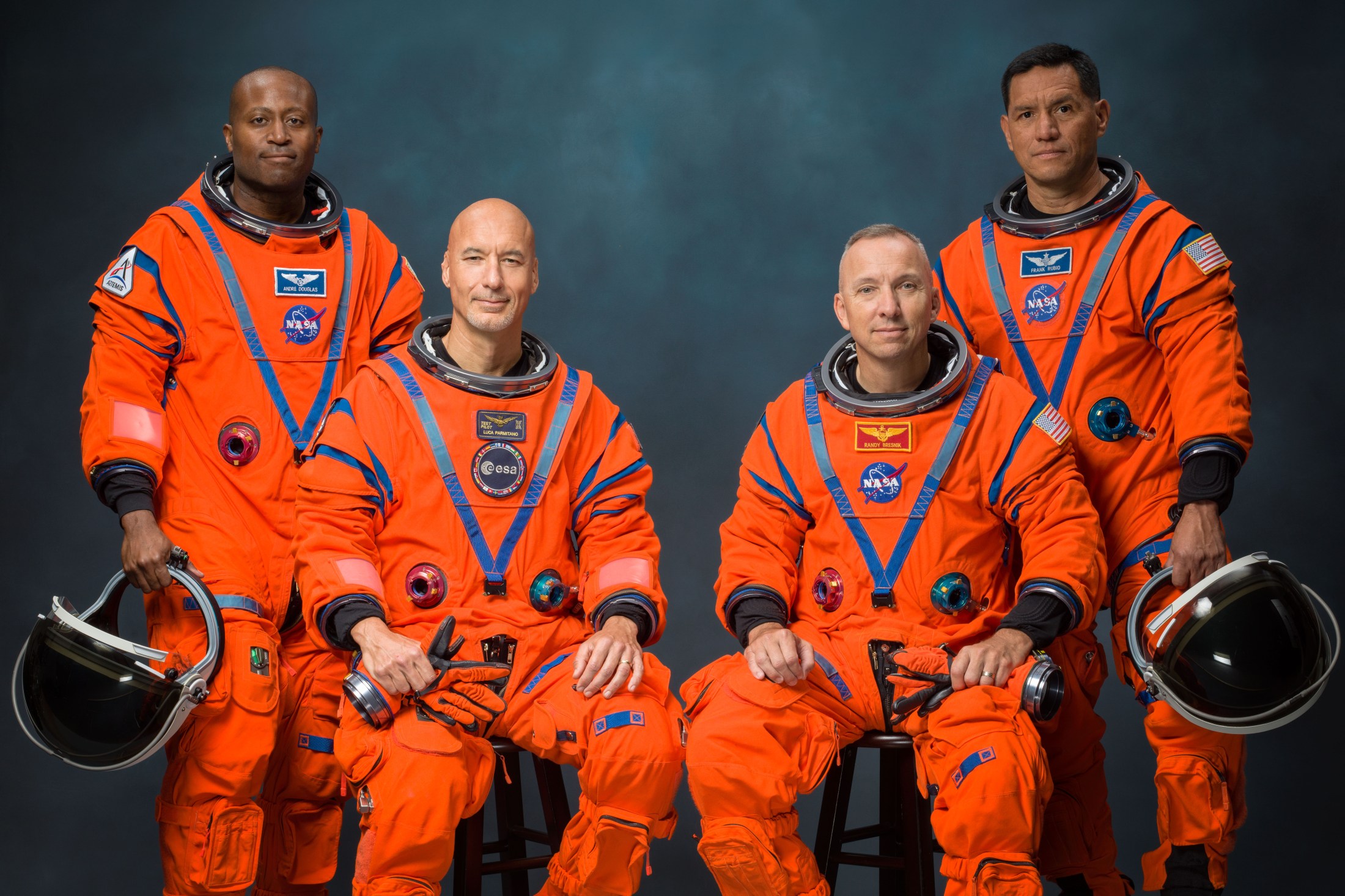
ASSIGNEDDOUGLAS·PARMITANO·BRESNIK·RUBIO
03 // Flight systems
Mission readiness
A living snapshot of every major system on the road to flight. Open a row for the latest milestone.CrewCREW-04Training+
Randy Bresnik, Luca Parmitano, Andre Douglas and Frank Rubio are training in Orion systems, mission operations and integrated simulations.
OrionORION-03First power-on complete+
After the modules were joined, teams powered on the combined spacecraft and verified electrical and communications connections.
SLSSLS-B1Boosters stacked+
Booster stacking finished on 30 September. NASA’s 13 October report confirms all four RS-25 engines are installed. Core-stage integration and the short-stack tanking test remain ahead. NASA update.
Blue MoonHLS-BLUETest article build+
Blue Origin is developing the pathfinder expected to launch first and wait for Orion in orbit.
Starship HLSHLS-SPXTest article build+
SpaceX is developing a Starship pathfinder for rendezvous, docking and integrated systems checkouts.
Launch windowKSC-39B2027 · Date TBD+
NASA lists a 2027 launch. No firm day or countdown is shown until an official date is set.
Mission profile // Preliminary
What Artemis III will actually do
It will not land on the Moon. It is an Earth-orbit rehearsal for the docking choreography future lunar crews will depend on.-
 01
01
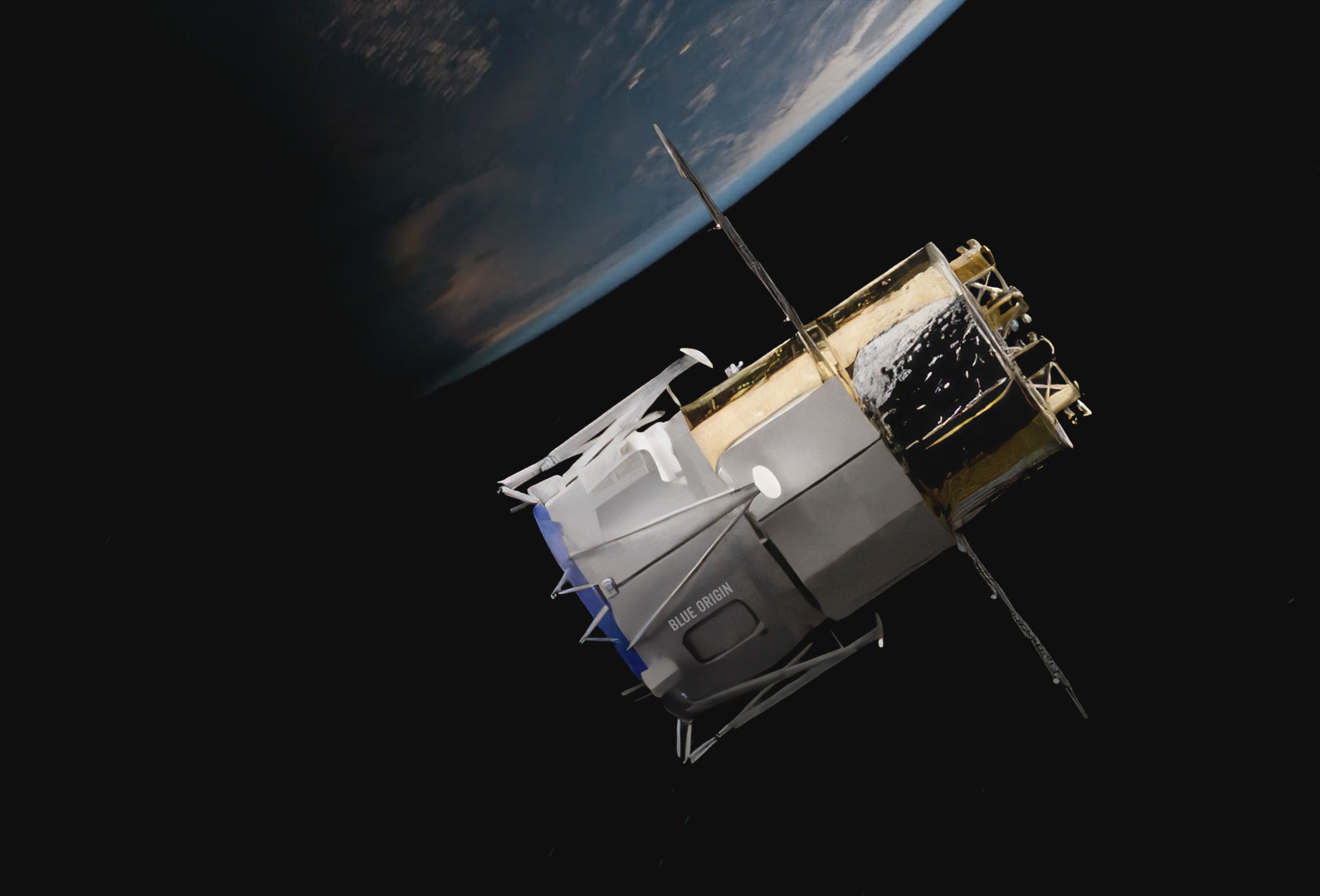
Blue Moon test article · ConceptBlue Origin ↗ COMMERCIAL LAUNCHES
Landers deploy
Blue Moon and Starship test articles launch separately. The Blue Origin pathfinder is expected to wait in orbit first.
-
 02
02
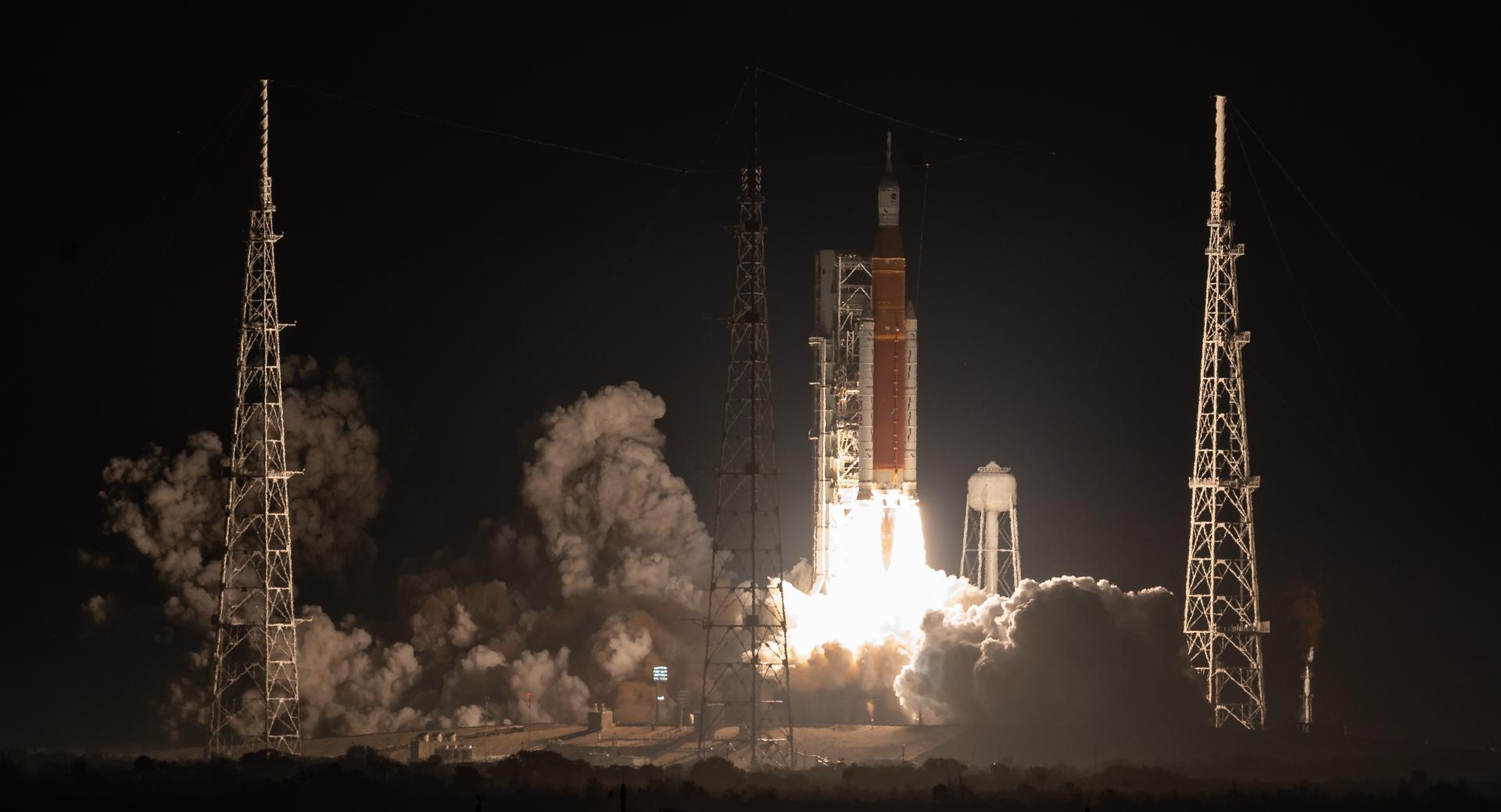
Artemis I launch · ArchiveNASA/Bill Ingalls ↗ SLS + ORION
Crew launches
Four astronauts lift off from LC-39B aboard Orion and complete spacecraft checkouts in low Earth orbit.
-
 03
03
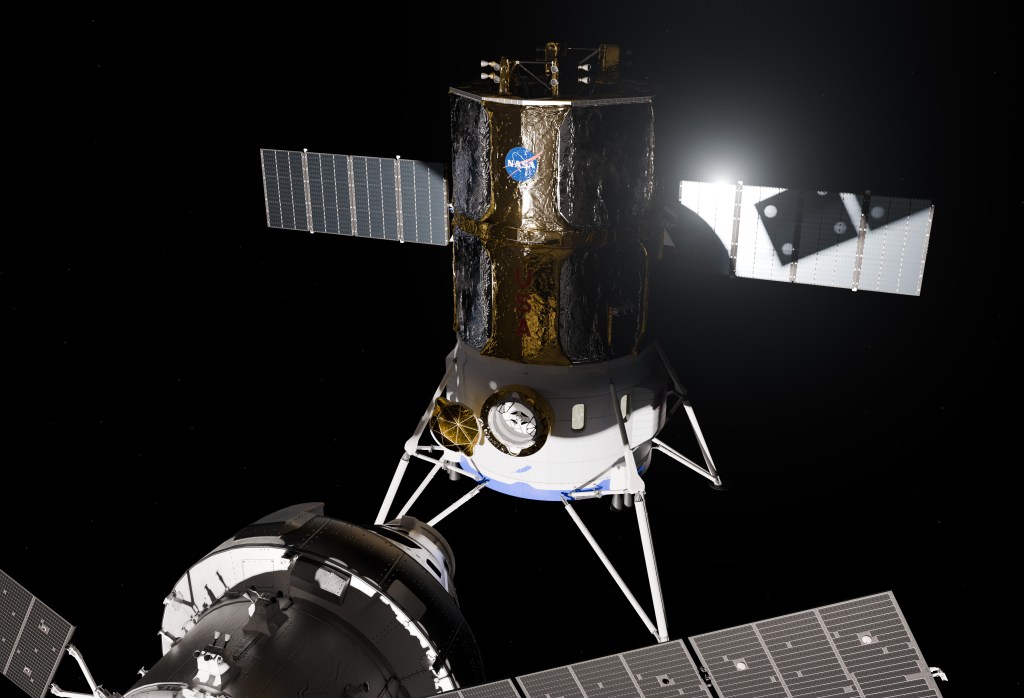
Blue Moon + Orion · ConceptBlue Origin ↗ ~2 DAYS CONNECTED
Blue Moon dock
Orion rendezvouses and docks. Up to two crew members enter the test article and run integrated technology demonstrations.
-
 04
04
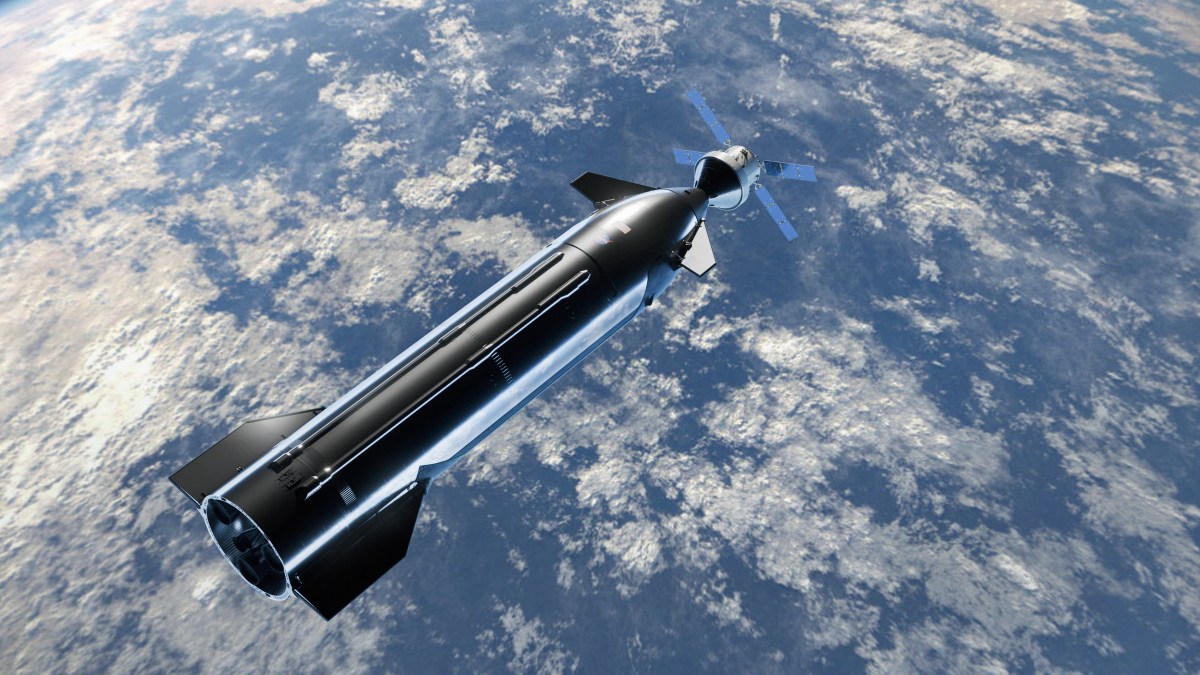
Starship + Orion · ConceptSpaceX ↗ ~1 DAY CONNECTED
Starship dock
After undocking, Orion meets the SpaceX pathfinder for a second docking, checkout and integrated vehicle-control campaign.
-
 05
05
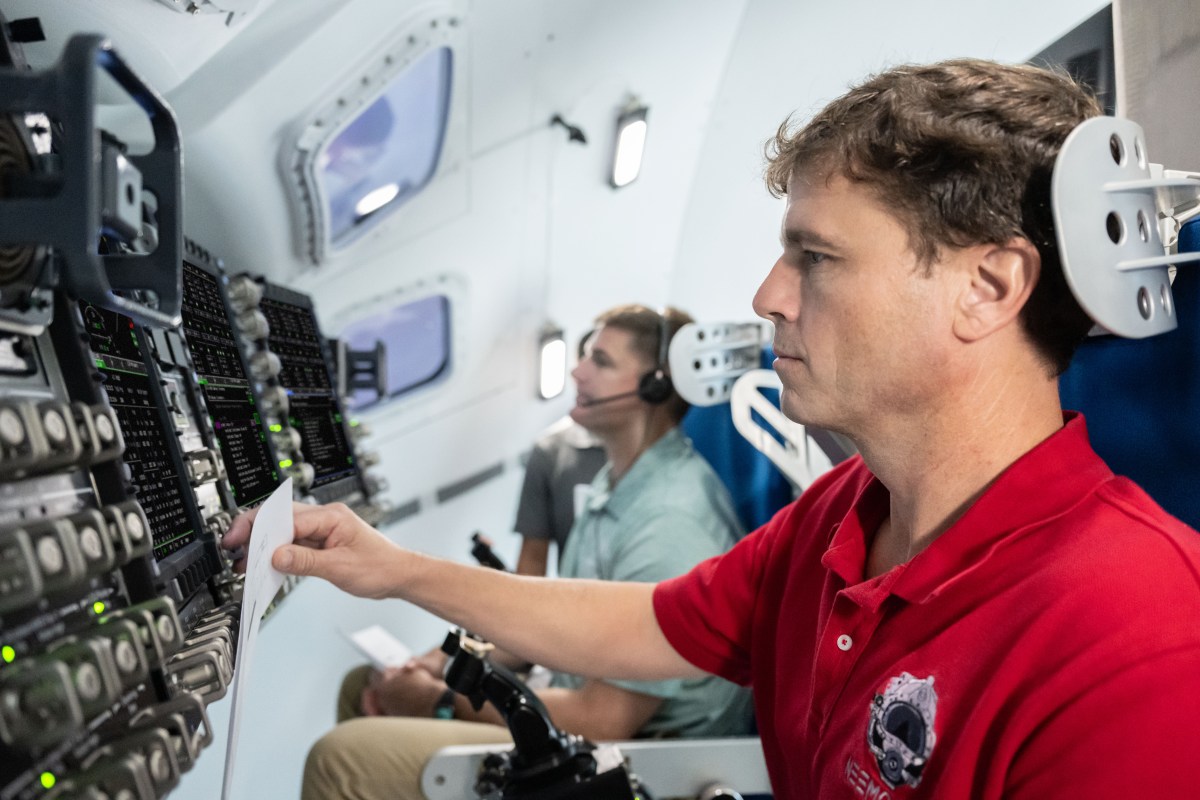
Artemis II training · ArchiveNASA/James Blair ↗ ORBITAL TEST RANGE
Systems proven
Interfaces, software, propulsion, life support and communications are exercised before the first crewed lunar landing.
-
 06
06
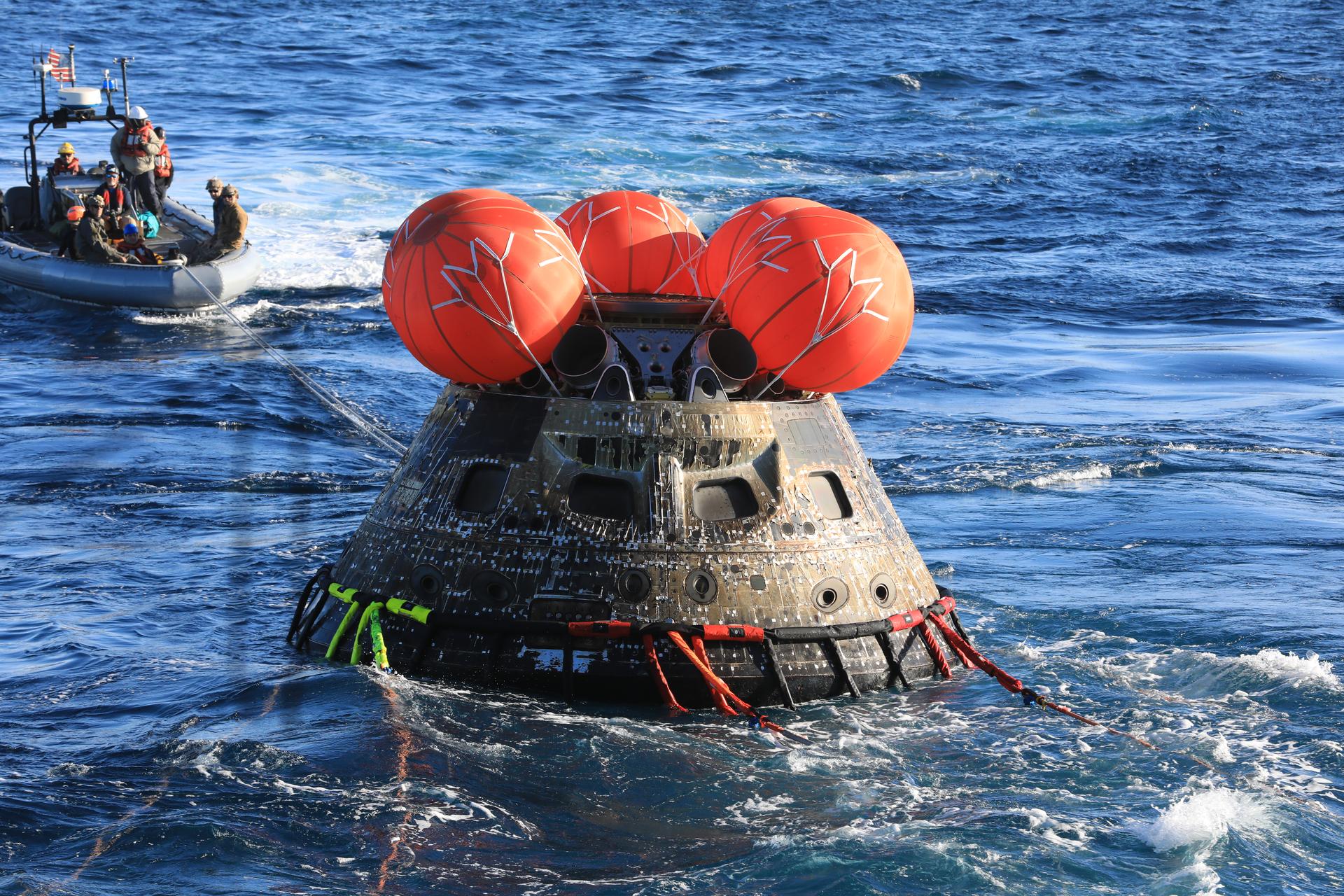
Artemis I recovery · ArchiveNASA/Kim Shiflett ↗ PACIFIC RECOVERY
Return to Earth
Orion undocks, re-enters and splashes down. NASA expects roughly two weeks in space, with exact timing set in flight.
Artemis IV’s crew will need to transfer safely between Orion and a commercial lander near the Moon. Artemis III moves the highest-risk integration work closer to Earth first.
Full NASA mission overviewHuman landing systems // Two providers
Meet the two Artemis III landers.
Blue Moon and Starship will meet Orion in low Earth orbit. They are test articles for the spacecraft that will later carry astronauts down to the lunar surface.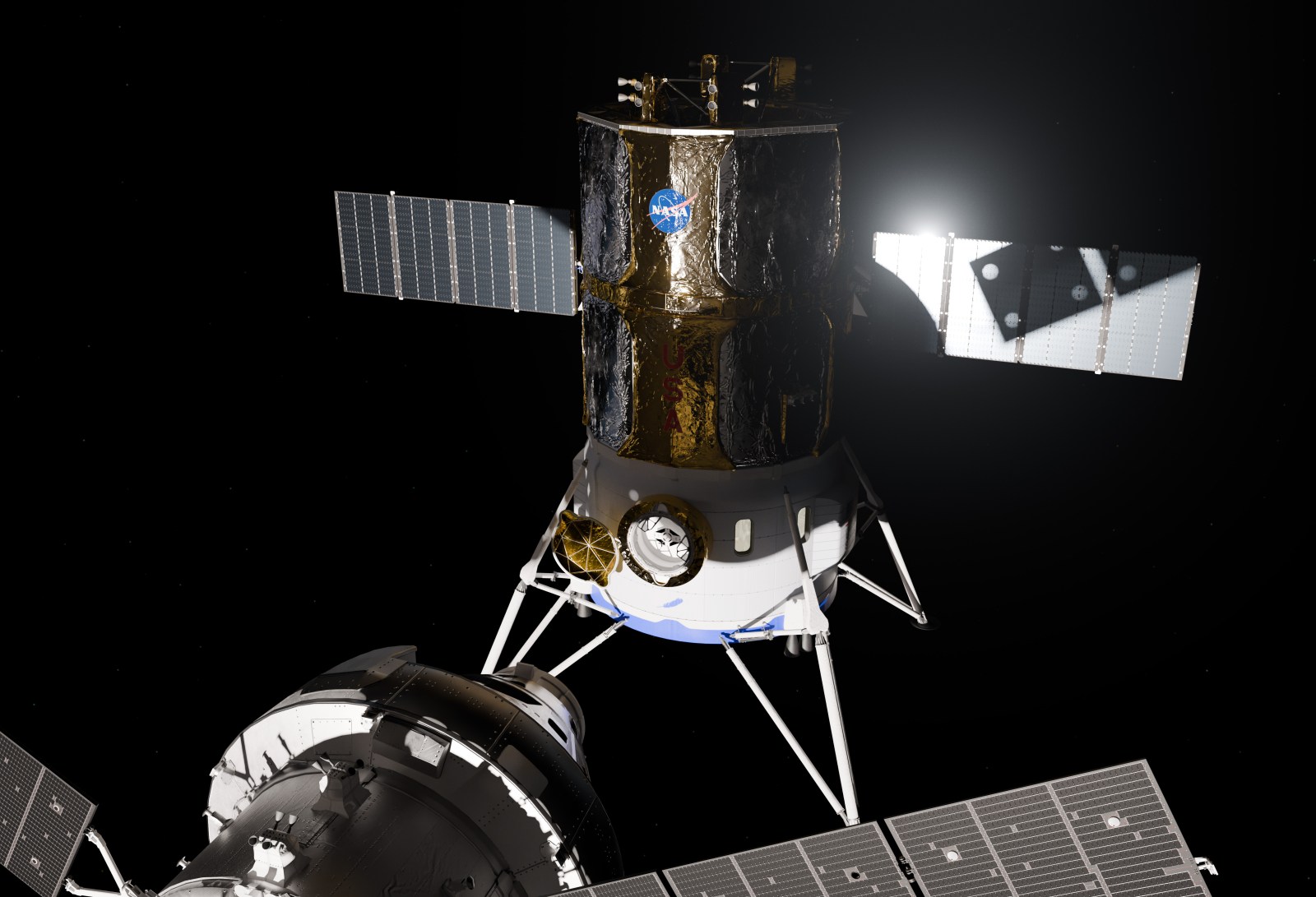 01 // BLUE ORIGINBLUE ORIGIN
Blue Moon test article
Blue Origin launches first, placing its vehicle in a parking orbit where it can wait for up to 30 days. Orion docks to the side of the lander and up to two astronauts are planned to enter its crew cabin for integrated checks.
- Launch order
- First
- Docking
- Side port
- Crew entry
- Up to two
- Stack control
- Orion
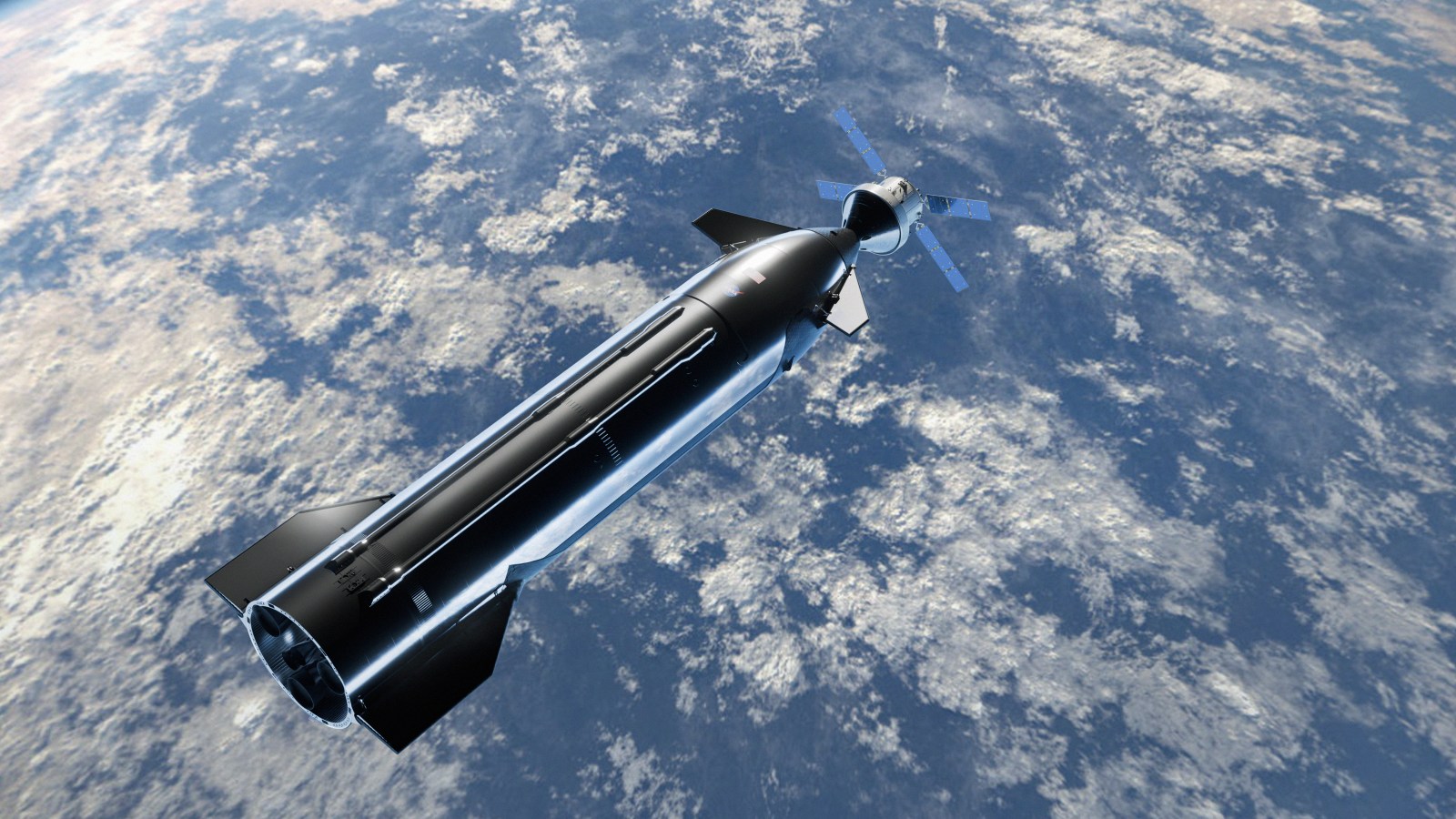 02 // SPACEXSPACEX
Starship test article
SpaceX launches after the Blue Moon phase. Orion docks nose-to-nose with the 52-metre vehicle to test communications, controllability and the dynamics of the combined stack. The astronauts remain inside Orion.
- Launch order
- Third
- Docking
- Nose-to-nose
- Crew entry
- No
- Stack control
- Starship
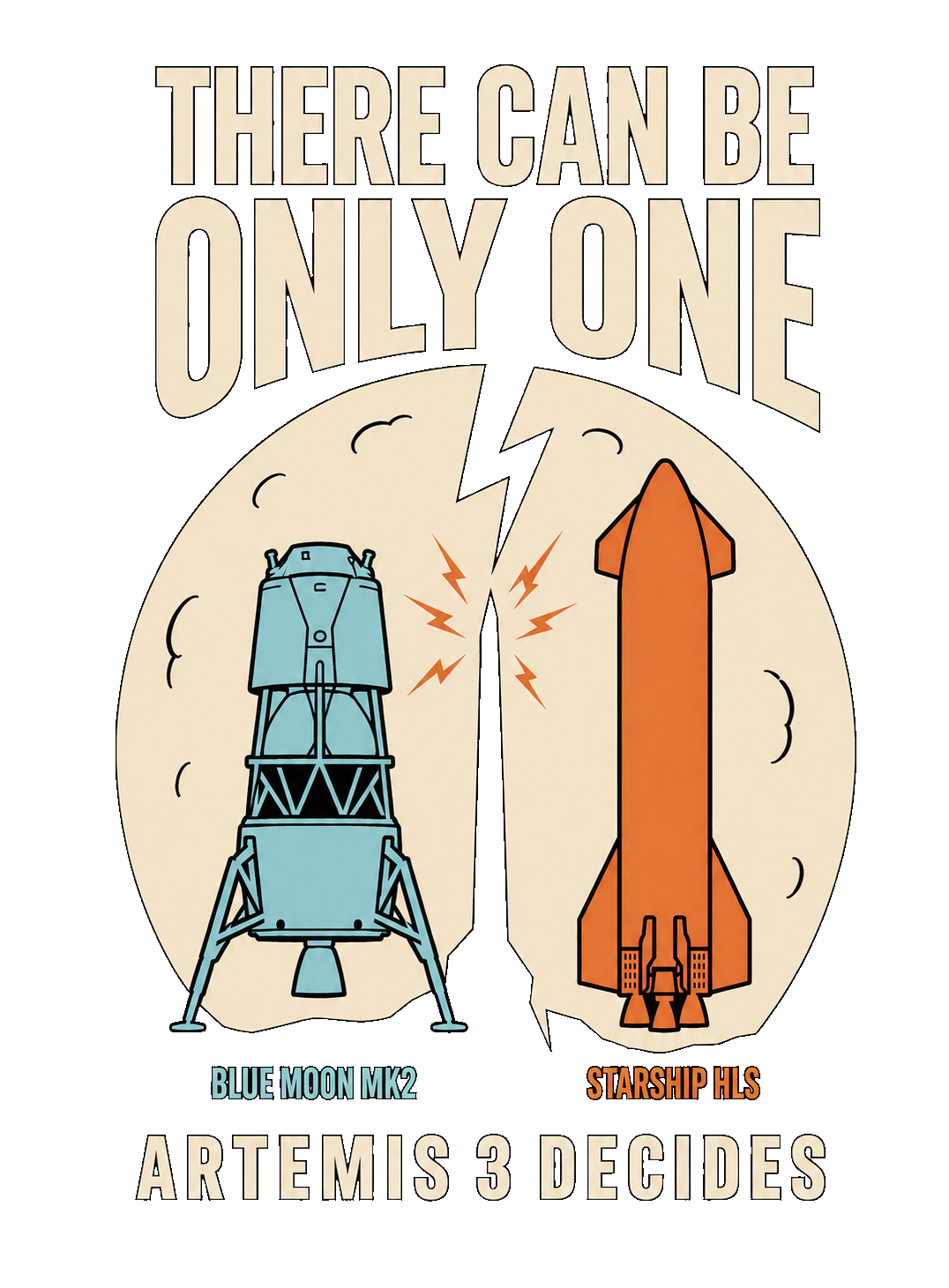
BLUE MOON VS STARSHIP // FAN POLL
Which lander would you choose for Artemis IV?
Two landers. One big question. If the choice were yours, which would you back to take astronauts to the Moon on Artemis IV?
Loading the poll…
The community’s choice
An independent fan poll, not a NASA selection or prediction. Artemis III’s detailed plan includes tests with both Blue Moon and Starship. Artemis IV mission plans remain subject to change. Explore the mission plan · NASA’s Artemis IV overview ↗
One vote per browser. Voting saves a cookie for up to six months to prevent repeat votes; no name or email is requested. Privacy · Wear your team →
Flight crew // Assigned 09 Jun 2026
Meet the Artemis III crew.
An experienced international crew blending command, engineering, medicine and long-duration operations.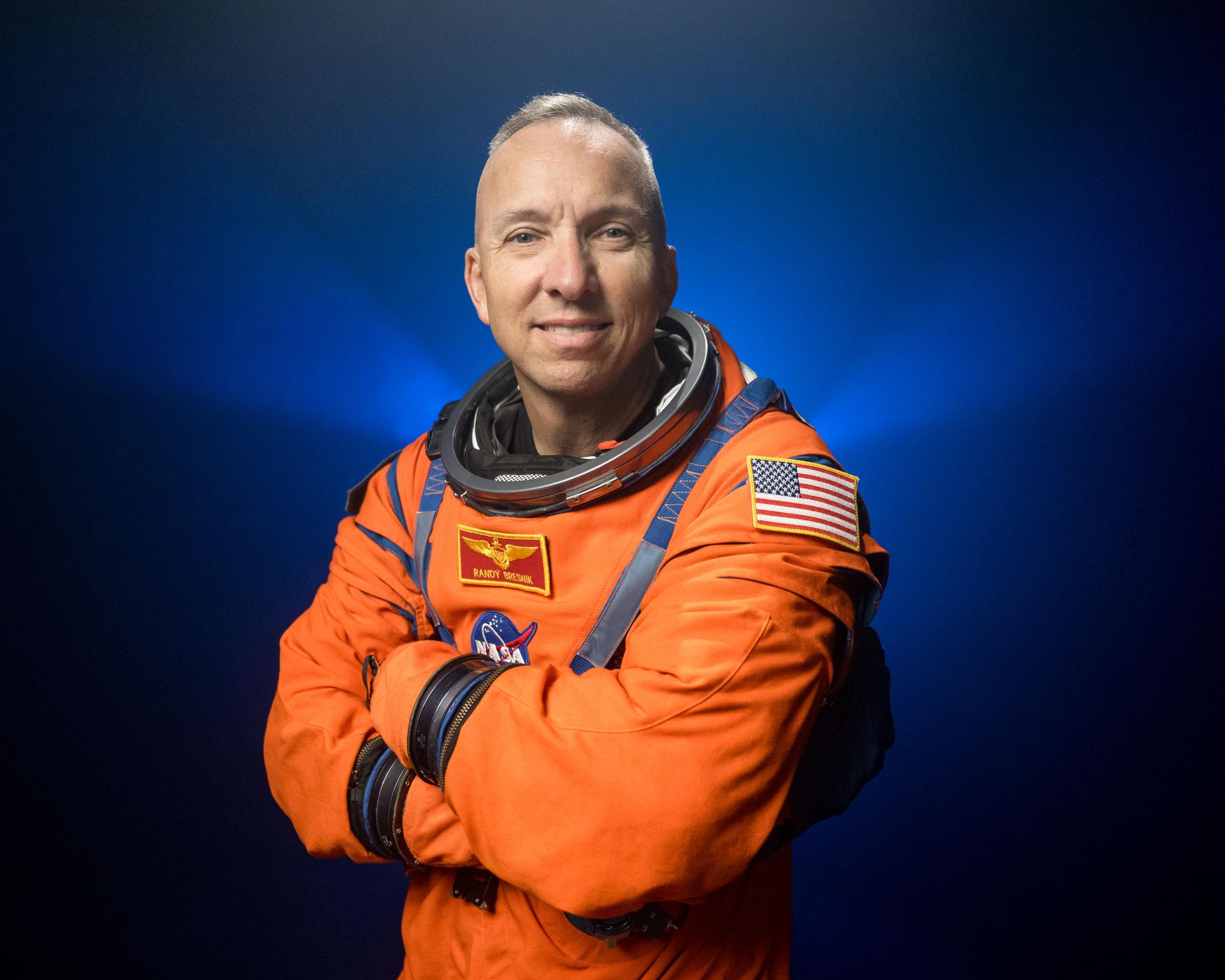 01NASA / BILL STAFFORD
NASA // 3rd spaceflight
Randy Bresnik
CommanderShuttle and ISS veteran; former Expedition 53 commander and exploration systems lead.View profile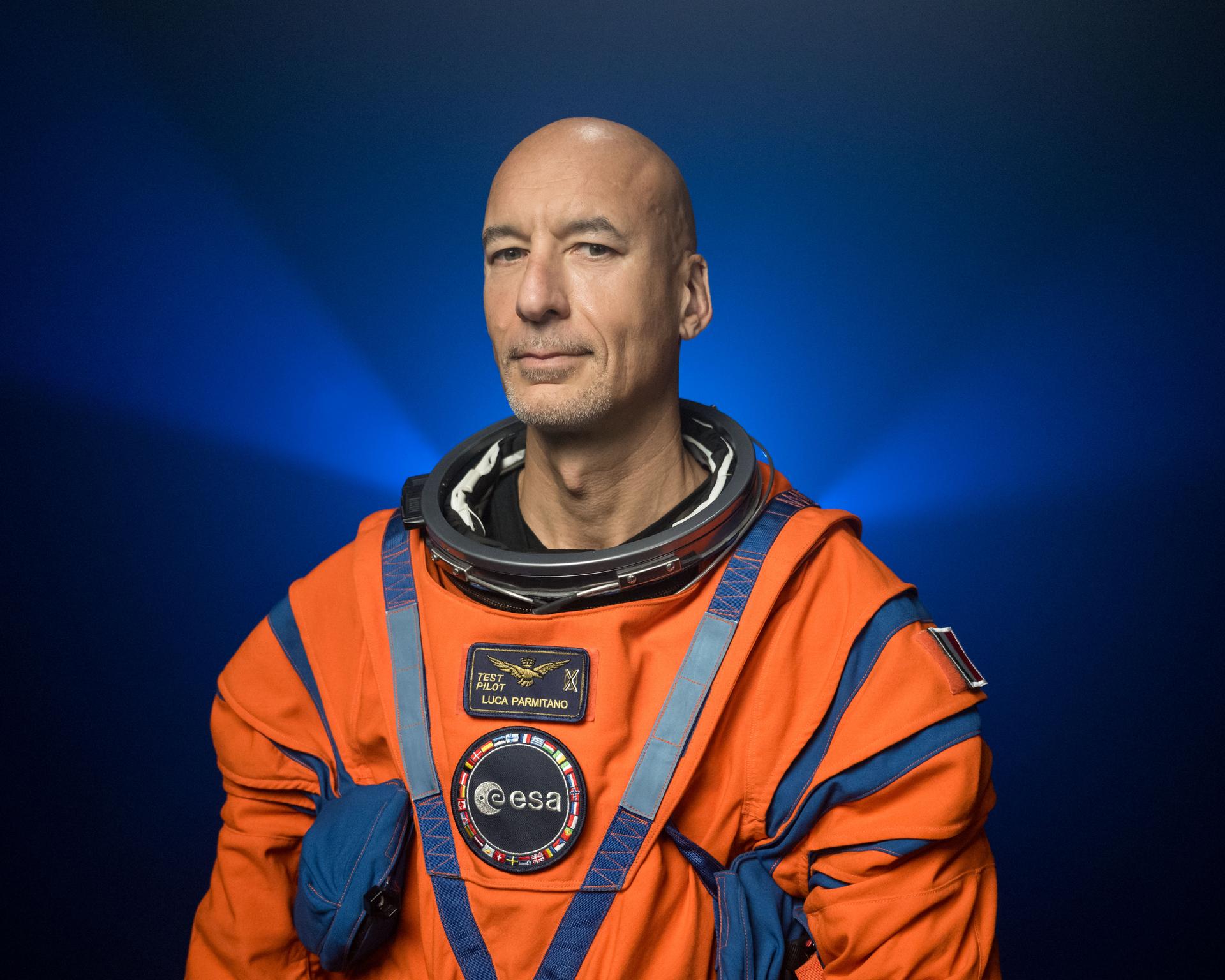 02NASA / BILL STAFFORD
ESA // 3rd spaceflight
Luca Parmitano
PilotFormer Expedition 61 commander and the first ESA astronaut assigned to an Artemis crew.View profile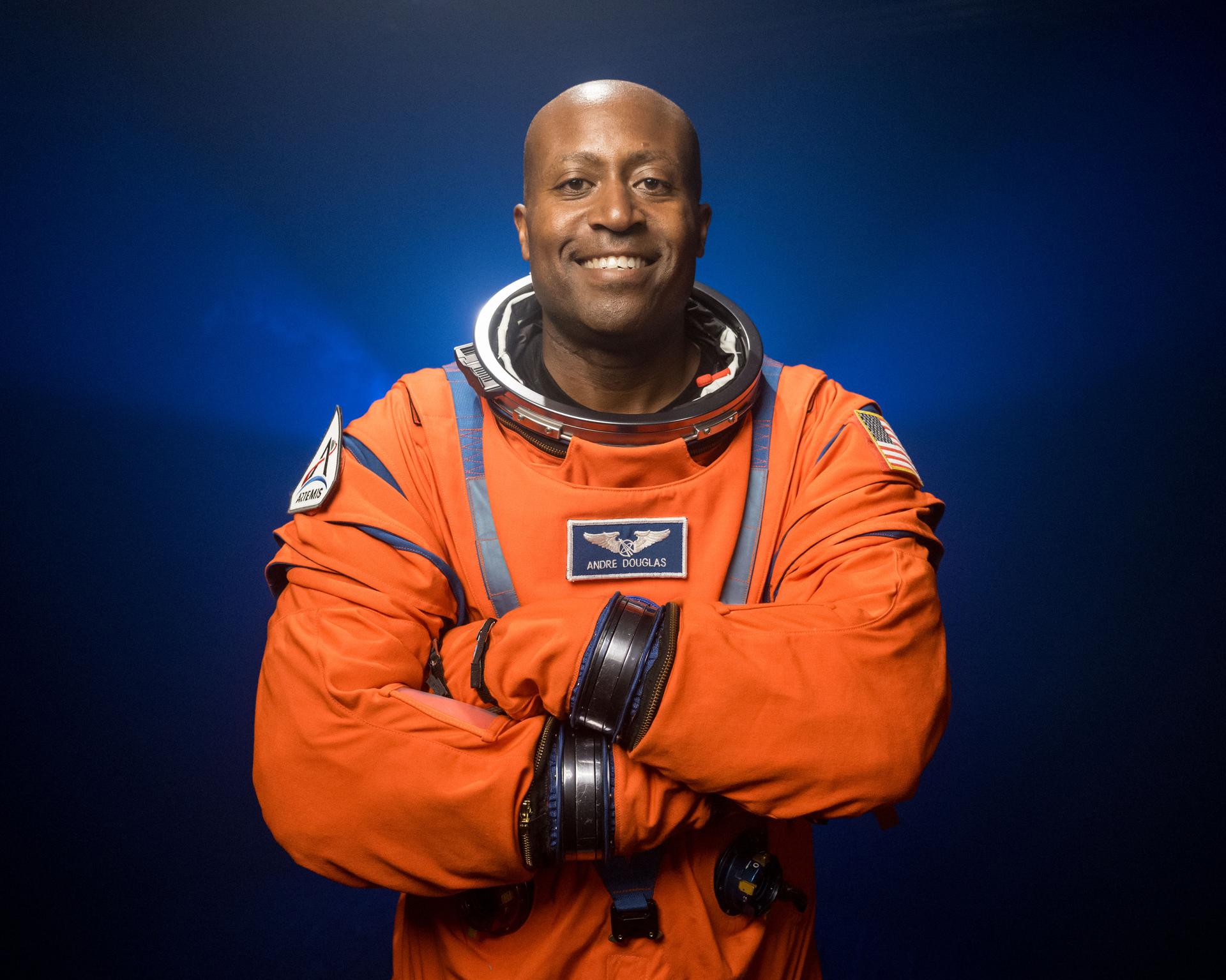 03NASA / BILL STAFFORD
NASA // 1st spaceflight
Andre Douglas
Mission SpecialistSystems engineer and former Artemis II backup and closeout crew member.View profile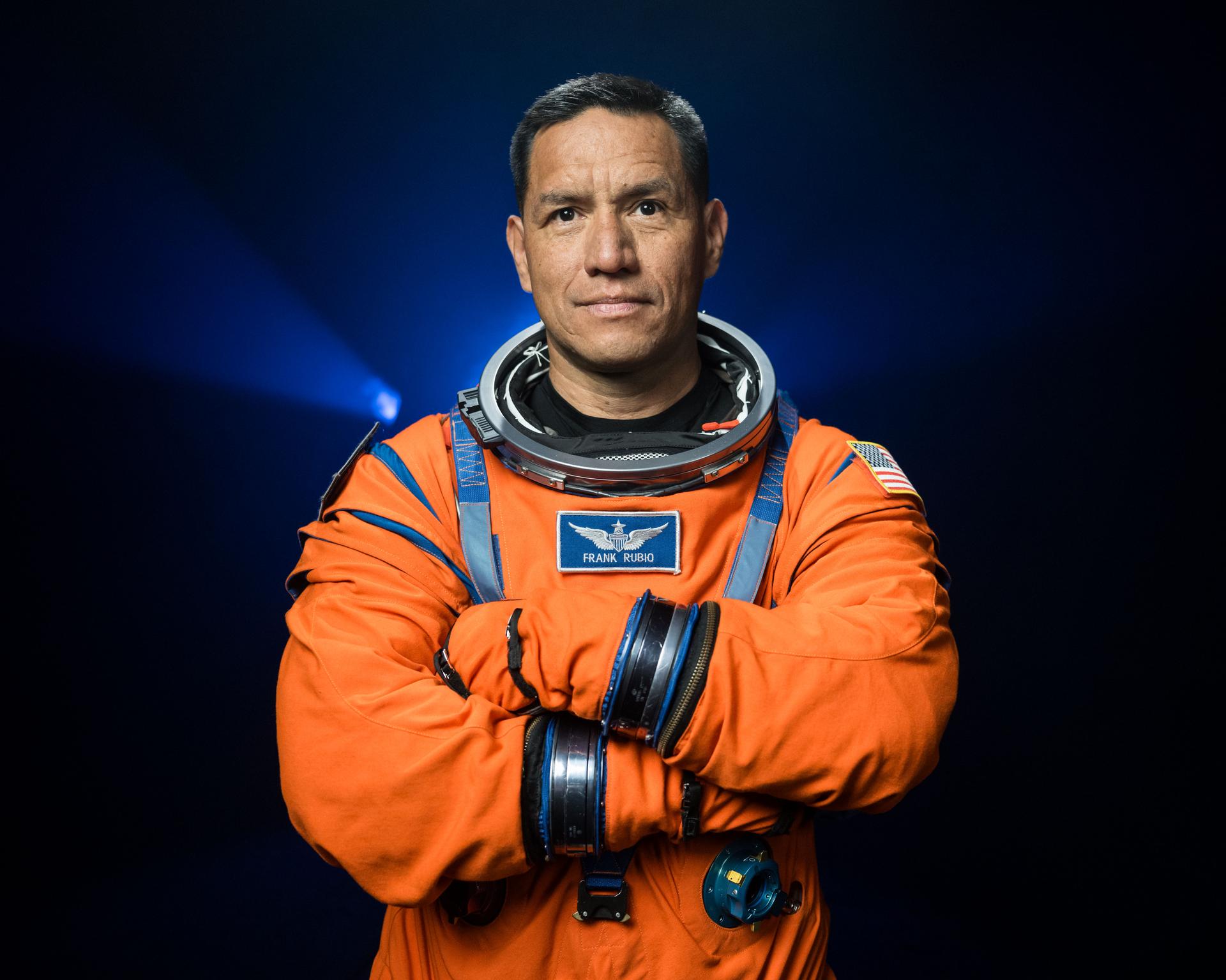 04NASA / BILL STAFFORD
NASA // 2nd spaceflight
Frank Rubio
Mission SpecialistArmy flight surgeon and record-setting veteran of 371 continuous days in orbit.View profileTraining alongside the prime crew and ready to fill any flight position if required.
Programme track // 2026–2027
Road to launch
Milestones completed, in progress and still ahead. No artificial countdown until NASA sets a launch date.Artemis II returns
Orion completes the first crewed Artemis flight and splashes down safely in the Pacific.
Crew assigned
NASA names the four prime crew members and backup astronaut Bob Hines.
SLS stacking begins
Twin solid rocket booster segments begin stacking inside the Vehicle Assembly Building.
Orion first power-on
The joined spacecraft is powered on and its electrical and communications connections are verified.
Booster stacking complete
NASA’s 13 October update also confirms all four RS-25 engines are installed. Core-stage integration is next.
Multi-launch campaign
Commercial lander test articles and the crewed SLS/Orion stack launch into low Earth orbit.
Mission essentials // Sources checked 20 Sep 2026
Artemis 3: your questions answered
The launch target, crew and purpose of the next Artemis flight.When is the Artemis 3 launch date?
NASA lists 2027 as the launch target, not a confirmed day. We show the target year rather than a speculative countdown. NASA mission overview.
Will Artemis III land on the Moon?
No. Artemis III is a crewed demonstration in low Earth orbit, preparing systems for later lunar landings beginning with Artemis IV. NASA mission plan.
Who is on the Artemis III crew?
Randy Bresnik, Luca Parmitano, Andre Douglas and Frank Rubio. Explore their backgrounds in our crew profiles. NASA crew-training report.
Which landers are involved?
Blue Origin’s Blue Moon and SpaceX’s Starship HLS programmes are developing test vehicles for the orbital demonstration, rather than flying a lunar landing on this mission. Plans remain preliminary. NASA lander-test explanation.
Is this a live spacecraft tracker?
Not yet: this page follows mission preparation and published milestones. The readiness board shows its source date; it is not live telemetry. Read the dated hardware briefing.
Where can I find Artemis II coverage?
Our Artemis II archive covers the earlier mission. This homepage now follows Artemis III; the information hub links the wider collection.
Independent coverage, not a NASA website. Mission plans and dates can change. Read our sourced mission briefing.
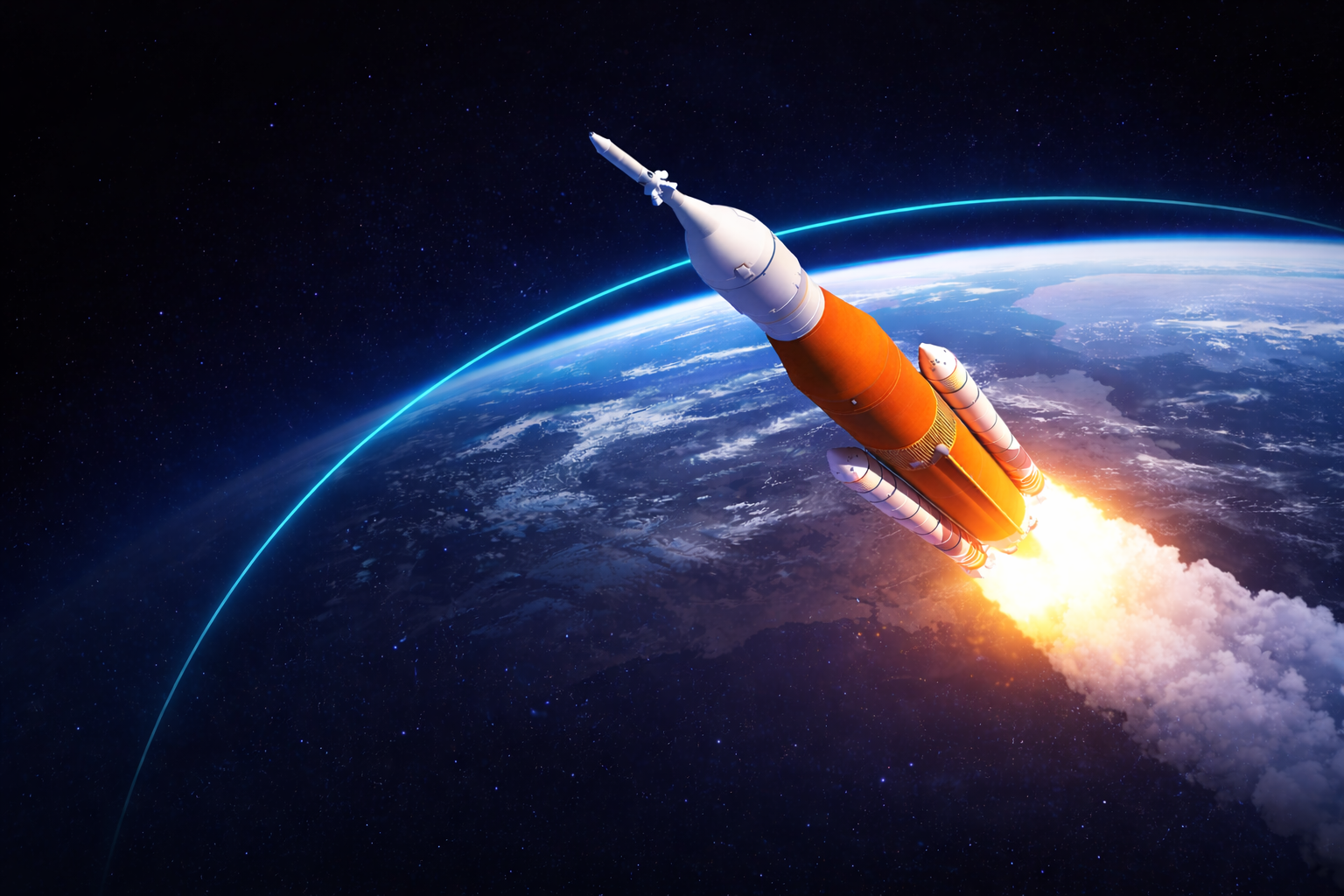 MISSION 02 // COMPLETE
ARTEMIS II ARCHIVE
Relive humanity’s return to lunar space.
Revisit the first crewed Artemis flight: launch, Orion’s journey around the Moon, the record-setting farthest distance and Pacific splashdown.

THE ROAD TO ARTEMIS III STARTS HERE